
FusionMed · Solutions
Lost Volume
Restore facial structure and youthful fullness with precision volumizing treatments — naturally and without surgery.
About This Concern
Facial volume loss is one of the primary drivers of aged appearance — more so than wrinkles alone. As we age, the fat compartments of the face deflate, the underlying bone structure gradually resorbs, and the skin begins to sag into the voids left behind. The result is a hollowed, gaunt, or tired appearance that cannot be adequately addressed by skin-only treatments. At FusionMed, we restore facial volume using a strategic, anatomy-informed approach — selecting the right volumizing agent for each area and depth to achieve a natural, youthful, and structurally correct result.
Understanding the Cause
Common Causes
- ✦
Age-related depletion of the facial fat compartments, particularly in the cheeks, temples, and under-eye area — beginning as early as the mid-30s
- ✦
Resorption of the underlying facial skeleton (maxilla, mandible, orbital rim), which reduces bony support for overlying soft tissue
- ✦
Loss of collagen and hyaluronic acid from the dermis and subcutaneous layer, reducing the skin's natural volume and hydration
- ✦
Weight loss — either intentional or age-related — which accelerates facial fat depletion and creates a hollow, gaunt appearance
- ✦
Sun damage and chronic UV exposure, which degrades dermal collagen and accelerates visible aging of the skin
- ✦
Genetic factors that predispose individuals to early or more pronounced facial hollowing in the mid-face and temples
Personalized Approach
Recommended Treatments
Dermal Filler
Hyaluronic acid fillers restore immediate volume to the cheeks, temples, tear troughs, lips, and jawline. Results are visible at once, with natural integration over 1–2 weeks. Reversible and highly customizable to your anatomy.
Learn More →
Sculptra & Radiesse
Collagen-stimulating biostimulators that work progressively to rebuild the skin's own structural framework. Sculptra (PLLA) and Radiesse (CaHA) produce lasting, natural-looking volumization over 3–6 months that integrates with your tissue.
Learn More →
Golden PRP
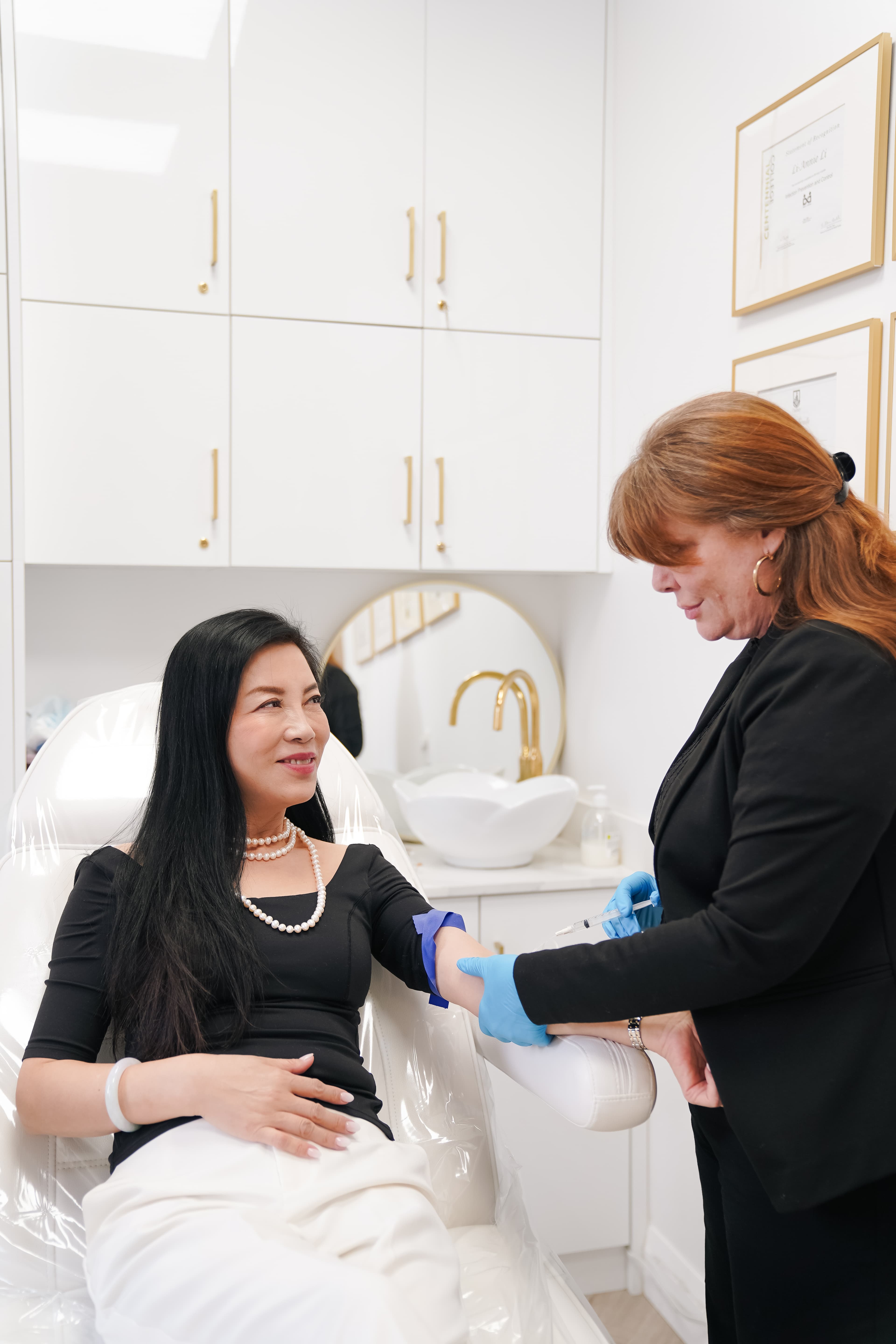
Platelet-rich plasma enriched with gold micro-particles stimulates tissue regeneration and collagen synthesis. Improves skin quality and hydration from within — addressing the tissue-level contributions to a depleted, aged appearance.
Learn More →
Common Questions
FAQs
Which areas of the face are most affected by volume loss?
The cheeks and mid-face are typically the first areas to show significant volume depletion, followed by the temples, tear troughs (under-eye hollows), and the area around the mouth. As these regions flatten, surrounding skin has less support, leading to jowling, deepening nasolabial folds, and an overall sunken appearance.
Will fillers make me look overdone or puffy?
This is the most common concern among patients and is directly related to technique and philosophy. At FusionMed, we prioritize anatomical accuracy and conservative dosing — adding volume in layers to restore what has been lost, not to create an inflated appearance. Our results should look refreshed, not treated.
What is the difference between filler and biostimulators like Sculptra?
Dermal fillers provide immediate volume by physically filling the space. Biostimulators like Sculptra work gradually by stimulating your own collagen production over months. They are often used together for optimal results: filler for immediate correction, biostimulators for long-term structural improvement.
How long do volumizing treatments last?
HA fillers in the cheeks and deeper areas typically last 12–18 months. Sculptra (biostimulant) results develop over 3–6 months and can last 2+ years. Combining approaches — and maintaining results with periodic touch-ups — is the most effective long-term strategy for facial volume management.
Ready to address your lost volume?
Book a consultation and our medical team will design a personalized treatment plan for you.
Book Consultation