
FusionMed · Solutions
Wrinkles
A targeted, multi-modal approach to wrinkle correction — addressing both the muscular and structural causes of line formation for natural, lasting improvement.
About This Concern
Wrinkles develop through a combination of repeated muscle movement, collagen loss, volume depletion, and photoaging. Effective treatment requires identifying which of these factors is driving each specific line — dynamic wrinkles (caused by muscle contraction) require different treatment than static wrinkles (present at rest due to collagen loss). At FusionMed, we categorize and treat wrinkles with precision, combining neurotoxin, dermal filler, and energy-based devices to address each type through its appropriate mechanism.
Understanding the Cause
Common Causes
- ✦
Repeated facial muscle contractions over decades, which crease the overlying skin and form expression lines on the forehead, around the eyes, and between the brows
- ✦
Progressive collagen and elastin loss from the dermis, reducing the skin's structural integrity and resilience against line formation
- ✦
Volume loss in the subcutaneous fat layer, which causes skin to fold and deepen nasolabial folds, marionette lines, and perioral lines
- ✦
Cumulative UV radiation exposure, which directly degrades dermal collagen and elastin and is the leading environmental cause of premature wrinkling
- ✦
Dehydration and compromised skin barrier, which accentuates the appearance of fine lines and surface texture irregularities
- ✦
Smoking, which reduces skin oxygen delivery and accelerates collagen degradation
- ✦
Gravity and soft tissue descent, which deepens static lines over time as skin loses its structural support
Personalized Approach
Recommended Treatments
Botox
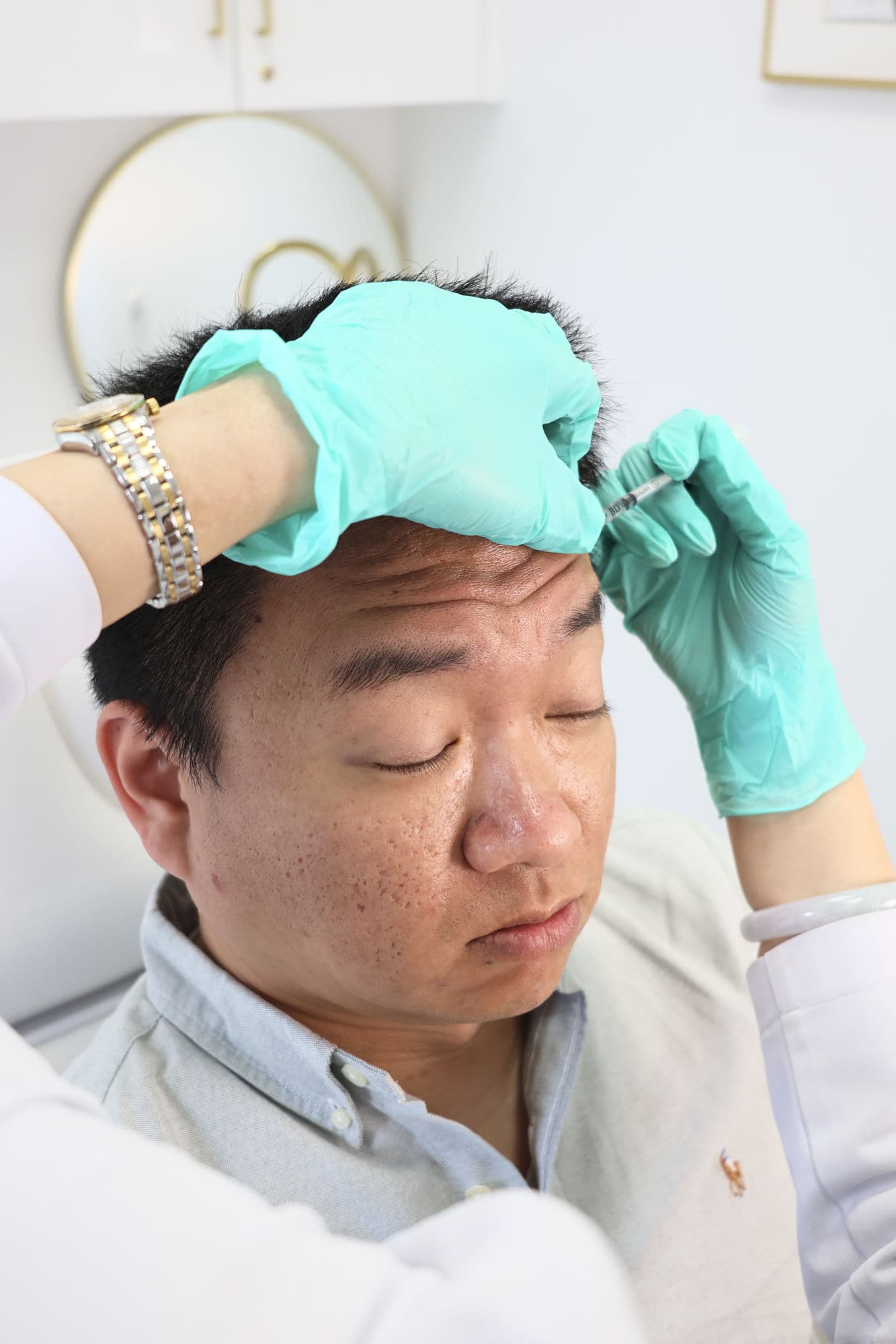
The gold standard for dynamic wrinkles — those caused by muscle movement. Precision neurotoxin placement relaxes the underlying muscle to smooth forehead lines, frown lines, crow's feet, and bunny lines, without freezing natural expressions.
Learn More →
Dermal Filler
Hyaluronic acid filler directly restores lost volume in areas where static wrinkles and folds have formed. Nasolabial folds, marionette lines, perioral lines, and under-eye wrinkles respond to volume restoration rather than muscle relaxation.
Learn More →
Thermage
Monopolar RF skin tightening that heats deep collagen to produce immediate firming and long-term remodeling. Addresses fine lines and skin texture improvement across the face in a single session with no downtime.
Learn More →
Common Questions
FAQs
What is the difference between dynamic and static wrinkles?
Dynamic wrinkles appear only when you make a facial expression — such as frown lines when you furrow your brow. They are caused by repeated muscle movement and respond to Botox & Neurotoxin. Static wrinkles are visible even at rest and result from collagen loss and volume depletion. They require filler, biostimulators, or energy-based treatments to address.
How young is too young for wrinkle treatment?
There is no defined minimum age, but most patients begin neurotoxin treatment in their late 20s to early 30s — often as a preventive measure to slow the formation of expression lines before they become static. The appropriate time to begin is a personal decision made in consultation with our medical team.
Can wrinkle treatments be combined?
Frequently yes. Botox & Neurotoxin and dermal filler are one of the most commonly combined treatment pairs — Botox & Neurotoxin addressing dynamic lines and filler restoring volume-related folds. Adding energy-based treatments like Thermage or Morpheus8 further addresses skin quality, laxity, and texture for comprehensive rejuvenation.
How long do wrinkle treatments last?
Botox & Neurotoxin typically lasts 3–4 months. HA dermal fillers in the face last 9–18 months depending on the area and product. Thermage results develop over 6 months and last 1–2 years. With consistent treatment and sun protection, the overall progression of wrinkling can be meaningfully slowed over time.
Ready to address your wrinkles?
Book a consultation and our medical team will design a personalized treatment plan for you.
Book Consultation