
FusionMed · Solutions
Pigmentation
Precision treatments that target melanin irregularities, reduce discoloration, and restore an even, luminous complexion.
About This Concern
Skin pigmentation disorders — including sunspots, age spots, melasma, post-inflammatory hyperpigmentation, and vascular marks — arise from an overproduction or irregular distribution of melanin in the skin. They are among the most common and persistent concerns affecting all skin tones. At FusionMed, effective treatment begins with accurate identification of the pigmentation type, because different forms of discoloration respond to entirely different treatments. Melasma, for example, requires a carefully managed approach, while solar lentigines respond predictably to IPL. Treating without accurate diagnosis risks worsening the condition.
Understanding the Cause
Common Causes
- ✦
Chronic and cumulative UV radiation exposure — the primary driver of solar lentigines (age spots, sunspots, and freckles) through melanocyte overstimulation
- ✦
Melasma — a hormonally driven form of deep dermal and epidermal pigmentation, triggered by estrogen fluctuations from pregnancy, oral contraceptives, or HRT, and dramatically worsened by sun exposure
- ✦
Post-inflammatory hyperpigmentation (PIH) — dark marks left after resolution of acne, eczema, psoriasis, or any skin trauma, more pronounced and persistent in medium to dark skin tones
- ✦
Medication-induced pigmentation from drugs including certain antibiotics, antimalarials, and NSAIDs
- ✦
Vascular pigmentation including port-wine stains, spider veins, and redness related to rosacea, which responds to laser rather than pigment-targeting treatments
- ✦
Genetic predisposition — skin tone, freckle pattern, and melanocyte density are all determined in part by hereditary factors
Personalized Approach
Recommended Treatments
IPL Laser
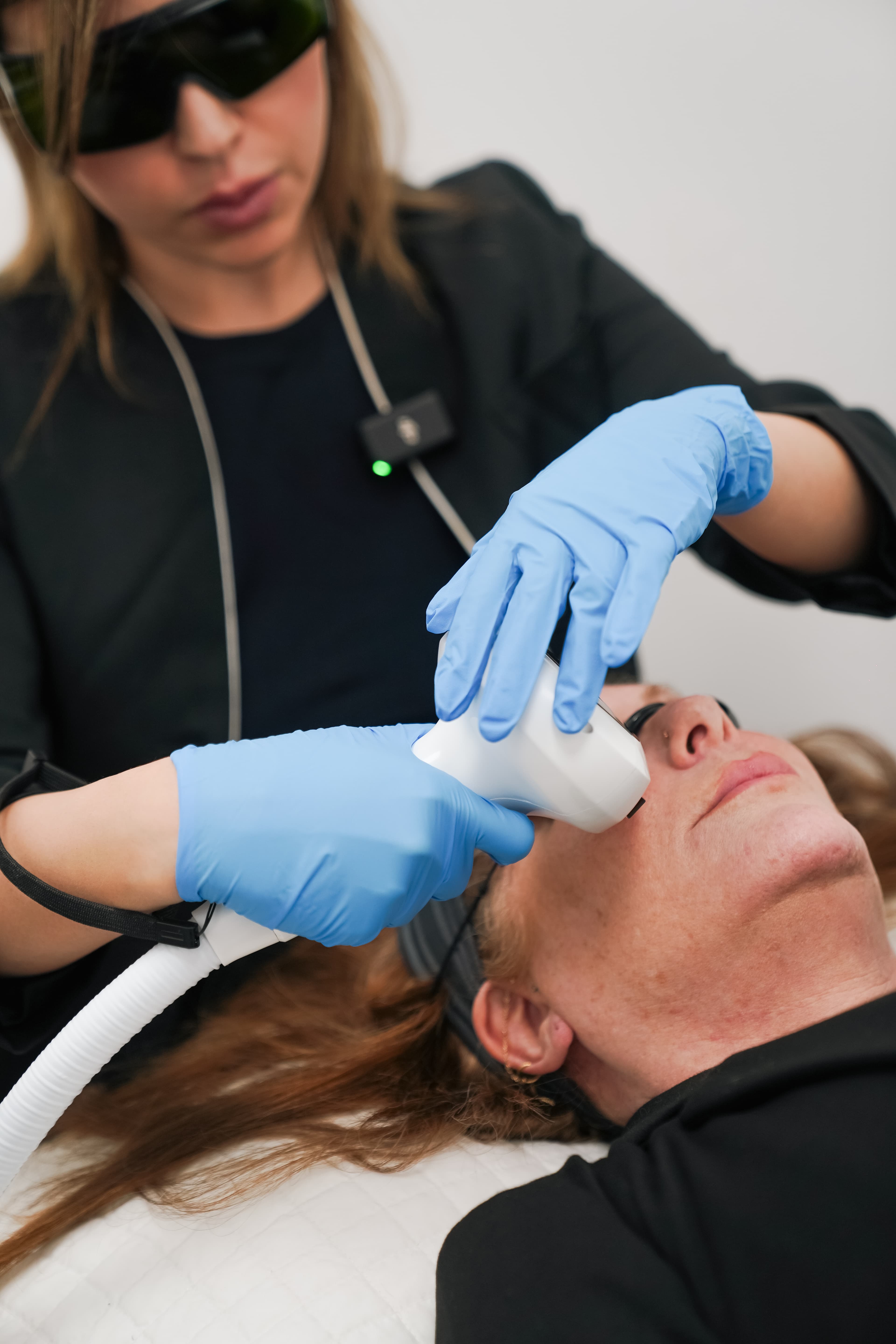
Intense Pulsed Light is highly effective for solar lentigines, sunspots, and vascular pigmentation. Targeted light pulses are selectively absorbed by melanin and oxyhemoglobin, breaking down discoloration without damaging surrounding skin.
Learn More →
Medical Peel
TCA, AHA/BHA, and combination acid peels accelerate the turnover of pigmented surface cells, brightening uneven tone and reducing both epidermal and superficial dermal pigmentation. Particularly effective for PIH and diffuse discoloration.
Learn More →
Morpheus8
Fractional RF microneedling stimulates collagen renewal in the dermis while bypassing the epidermis through insulated needles — making it suitable for improving overall skin quality and texture in pigmented skin without the risk of post-treatment PIH associated with surface lasers.
Learn More →
Common Questions
FAQs
Why is it important to identify the type of pigmentation before treatment?
Different pigmentation types have different depths, causes, and treatment responses. Solar lentigines (sunspots) respond well to IPL. Melasma is notoriously difficult and can worsen with aggressive heat-based treatments if not approached carefully. PIH requires anti-inflammatory protocols. Treating without an accurate diagnosis risks worsening the condition — which is why an assessment by our medical team is essential.
How many sessions are needed to see results?
For IPL targeting solar pigmentation, most patients see significant fading after 3–5 sessions. Chemical peels for PIH typically require a course of 4–6 sessions. Melasma management is an ongoing process requiring maintenance treatment and strict daily sun protection. Results build progressively and require patience.
Can pigmentation treatments be done on darker skin tones?
Yes, with careful treatment selection. Some laser wavelengths (like IPL) carry a higher risk of post-treatment PIH in darker skin tones (Fitzpatrick types IV–VI). For these patients, we prioritize safer modalities such as chemical peels, Morpheus8, and topical brightening protocols, with all laser parameters carefully calibrated. Our medical team's assessment always includes skin tone consideration.
Is sun protection really necessary, or is that just standard advice?
Daily SPF 50+ is non-negotiable for pigmentation treatment. Without it, UV exposure will continuously restimulate melanocyte activity, counteracting every treatment you receive. Melasma in particular is exquisitely sun-sensitive — even brief unprotected UV exposure can trigger recurrence of pigmentation that took months to fade.
Ready to address your pigmentation?
Book a consultation and our medical team will design a personalized treatment plan for you.
Book Consultation